How to Find a Good Plumber: 10 Tips from Industry Pros
1. Verify Their License
This is non-negotiable. Every state requires plumbers to hold a license, though the requirements vary. A licensed plumber has passed exams demonstrating they understand building codes, safety practices, and proper installation methods.
How to check: Ask the plumber for their license number. Then verify it on your state's licensing board website. In California, check the CSLB website. In Texas, check the Texas State Board of Plumbing Examiners.
An unlicensed plumber may be cheaper upfront, but if something goes wrong — a gas leak, water damage, code violation — you have no recourse, no warranty on the work, and potential liability issues when selling your home.
2. Check Insurance Coverage
A professional plumber should carry both general liability insurance (covers damage to your property during the job) and workers' compensation (covers their employees if injured on your property).
Ask for a Certificate of Insurance (COI). If a plumber doesn't have insurance and causes a flood in your home, you're on the hook for the damage. If their employee gets hurt on your property and they don't have workers' comp, you could be liable.
3. Read Reviews (The Right Way)
Check reviews on Google, Yelp, and the Better Business Bureau. But read them critically:
- Look for patterns, not individual reviews. One bad review among 50 good ones isn't a dealbreaker. Multiple complaints about the same issue (showing up late, surprise charges) is a red flag.
- Check how they respond to negative reviews. Professional companies address complaints calmly and offer solutions.
- Beware of only 5-star reviews. No company is perfect — a mix of 4-5 stars with some honest 3-star reviews is more trustworthy than a perfect score.
- Prioritize recent reviews. A company can change dramatically in a year. Focus on reviews from the past 6-12 months.
4. Get Multiple Estimates
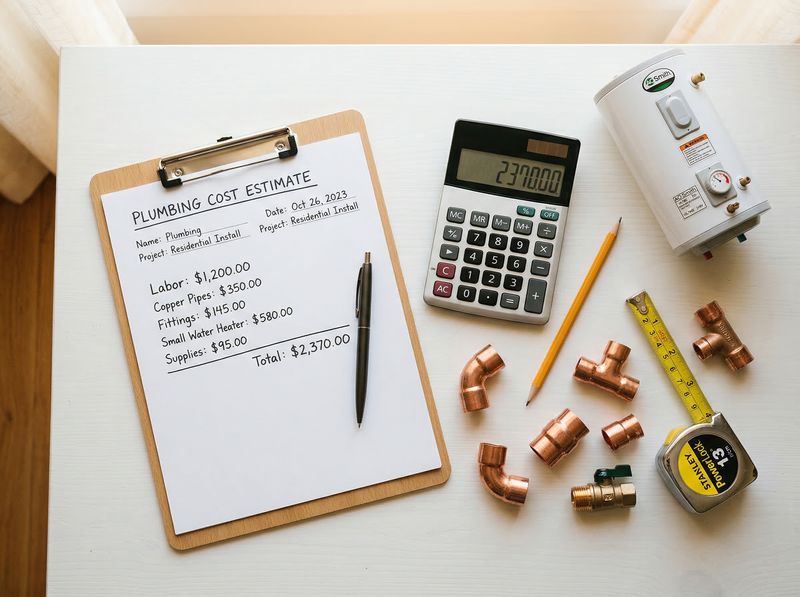
For any job over $500, get at least three written estimates. This gives you a realistic price range and helps identify outliers — both suspiciously cheap and overpriced quotes.
A good estimate should include:
- Detailed scope of work
- Materials and parts (with brand names)
- Labor cost (hourly or flat-rate)
- Permit costs if applicable
- Timeline
- Warranty on labor and parts
Be wary of verbal-only estimates or vague line items like "plumbing work — $2,000." You want specifics.
5. Questions to Ask Before Hiring
- "Are you licensed and insured?" (Verify independently)
- "Do you charge hourly or flat-rate?" (Know before they start)
- "Is there a service call fee, and is it applied to the repair?"
- "What's your warranty on labor?"
- "Who will be doing the actual work?" (The master plumber or an apprentice?)
- "Will you pull the necessary permits?"
- "Can you provide references from recent jobs?"
- "What happens if the job costs more than the estimate?"
6. Red Flags to Watch For
- Demands cash payment upfront. Legitimate plumbers accept credit cards and send invoices.
- No written estimate. Verbal-only pricing leads to disputes.
- Pressures you to decide immediately. "This price is only good today" is a high-pressure tactic.
- No license or won't share it. Walk away immediately.
- Shows up in an unmarked vehicle. Professional plumbing companies have branded trucks.
- Wants to skip the permit. "We can save you money by not pulling a permit" is a massive red flag.
- Recommends full replacement when repair is possible. Get a second opinion if a plumber says you need a full repipe or new water heater without a thorough inspection.
A good plumber is worth their weight in gold. They'll diagnose the real problem, fix it right the first time, charge a fair price, and stand behind their work. Take the time to vet them upfront — it saves headaches and money down the road.
For an idea of what different plumbing jobs should cost in your area, check our cost guides for detailed pricing across 20+ cities.